
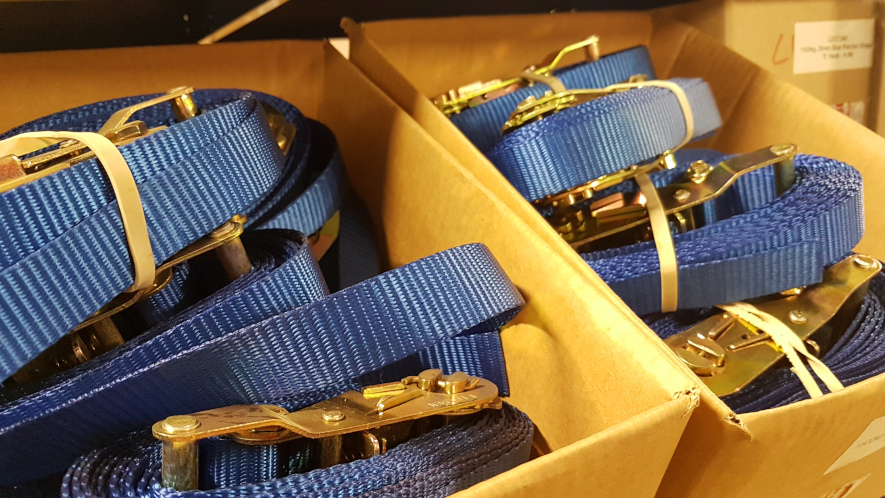
5 Tips For Inspecting Ratchet Straps For Damage
One area to check when transporting loads is ratchet straps. They are susceptible to wear and tear over time and need replacing. How do you check ratchet straps for damage and when should you replace them?
1. Visual Inspection of the Webbing
Start by thoroughly examining the entire length of the webbing. Look for:
- Cuts, tears, or fraying
- Burn marks or melting
- Discoloration or fading
- Abrasion or excessive wear
- Chemical damage or staining
Any visible damage to the webbing is a sign that the strap should be replaced immediately. The webbing is the primary load-bearing component and must be in perfect condition.
2. Check the Stitching
Examine all stitched areas carefully, particularly where the webbing is sewn to the hardware. Look for:
- Broken or loose stitches
- Torn or pulled stitching
- Gaps in the stitching pattern
Compromised stitching significantly reduces the strap's load capacity and is a serious safety concern.
3. Inspect the Ratchet Mechanism
The ratchet mechanism should operate smoothly and lock securely. Check for:
- Bent or damaged pawls
- Worn teeth on the gear
- Difficulty opening or closing
- Rust or corrosion
- Cracks in the housing
A faulty ratchet mechanism can fail under load or release unexpectedly, leading to load shifts and potential accidents.
4. Examine the Hooks and Hardware
All metal components should be checked for:
- Cracks or deformation
- Excessive wear or thinning
- Corrosion or rust
- Bent or damaged hooks
- Missing safety latches
Metal fatigue and stress cracks may not be immediately visible, so pay close attention to any unusual wear patterns.
5. Check the Label and Load Rating
Every ratchet strap should have a label showing its Working Load Limit (WLL) and break strength. If the label is missing or illegible, the strap should be replaced. Never use a strap if you don't know its rated capacity.
When to Replace Ratchet Straps
Replace ratchet straps immediately if you find:
- Any cuts or tears in the webbing
- Significant fraying or abrasion
- Compromised stitching
- Damaged or non-functioning hardware
- Missing or illegible load rating labels
- Signs of chemical damage
- The strap has been involved in an incident
Regular Inspection Schedule
Ratchet straps should be inspected before each use and undergo a more thorough examination regularly. Keep detailed records of inspections and replacements to ensure load safety compliance.
For high-quality replacement ratchet straps and load restraint equipment, visit Part-Serv.com or contact our team at Fleet-Serv.
Need Fleet Services?
Contact our team for expert fleet management and maintenance solutions
GET IN TOUCH